

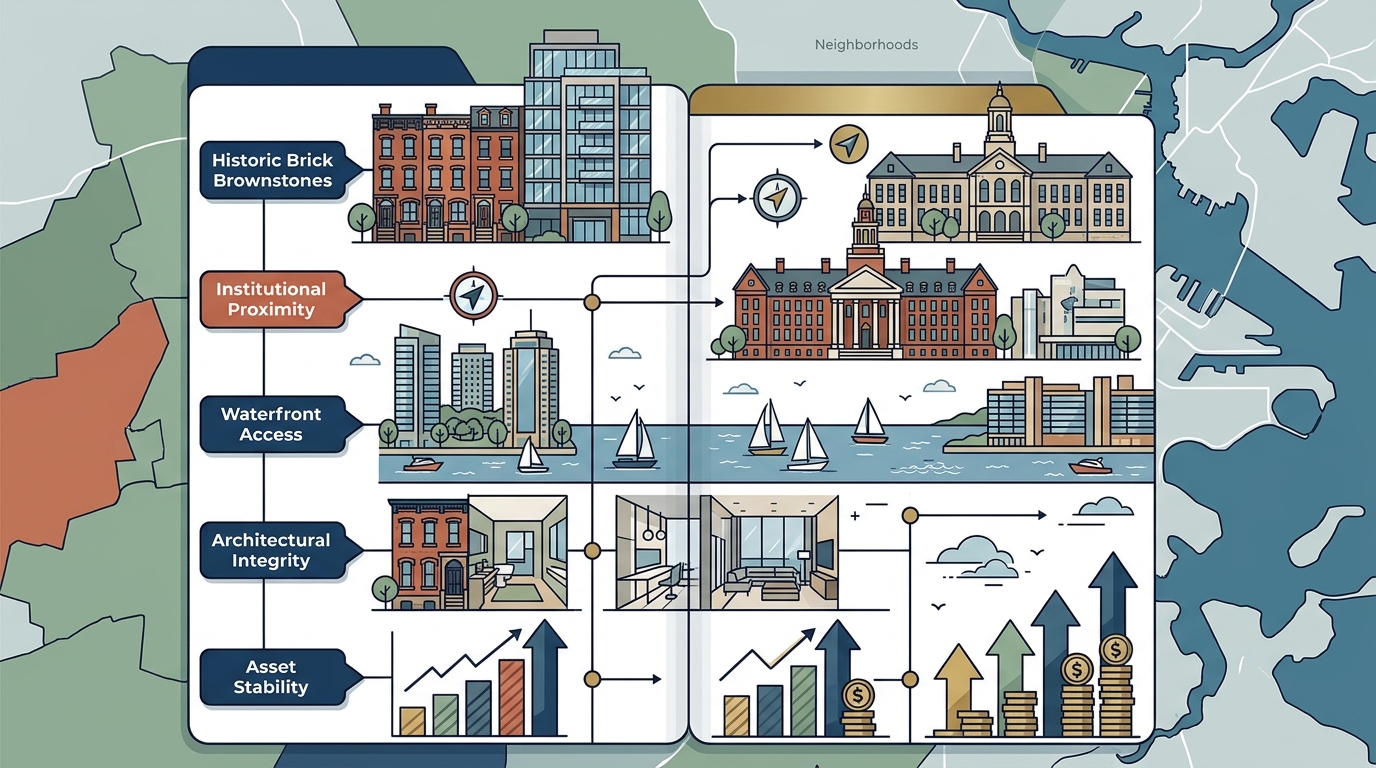
Greater Boston luxury real estate differs from other markets due to its dense urban fabric, historic preservation laws, and high demand for waterfront and institutional proximity. Buyers in this region often prioritize architectural integrity and long-term asset stability over sheer square footage. This unique blend of history and modern convenience creates a distinct valuation model that requires specialized local knowledge to navigate effectively.
Historic Preservation and Architectural Integrity
One of the most defining features of the Greater Boston luxury market is the strict enforcement of historic preservation guidelines. In neighborhoods like Beacon Hill and Back Bay, properties are often subject to design review boards that regulate exterior modifications. This means that a luxury home here is not just a structure but a protected piece of urban heritage. For buyers, this implies that renovation plans must respect original materials and architectural styles, which can limit certain modern upgrades but preserves the long-term aesthetic value of the property. For additional details, review the Meet Guy Contaldi Your.
The presence of these regulations creates a stable, albeit slower, appreciation curve compared to newer suburban developments. Buyers must understand that the value of these homes is tied to their historical significance and location within a protected district. This requires a buyer to look beyond standard square footage metrics and focus on the provenance and condition of the original architecture. For additional details, review the Just a moment.
Waterfront Access and Institutional Proximity
Waterfront properties in Greater Boston command a premium due to their scarcity and the high cost of maintaining them. Communities like Revere and East Boston offer direct access to the harbor, providing views and lifestyle amenities that are rare in other major metropolitan areas. The proximity to major institutions, such as top-tier universities and medical centers, also drives demand for luxury housing in these areas. This institutional presence ensures a steady flow of high-net-worth individuals who require convenient, high-quality living spaces close to their professional commitments. For additional details, review the First Time Home Buyer.
For investors and buyers, this proximity translates into strong rental yields and low vacancy rates. The demand for luxury waterfront homes is not just about aesthetics; it is about access to a specific lifestyle and professional network. Understanding this dynamic is crucial for making informed decisions in the Greater Boston market. For additional details, review the Explore Boston Neighborhood Guides.
Multi-Family Investment Potential
Unlike many other luxury markets that focus primarily on single-family homes, Greater Boston has a strong tradition of multi-family living. Luxury multi-family properties, often referred to as